
Log book › Services
ServicesWhat comes through the workshop.
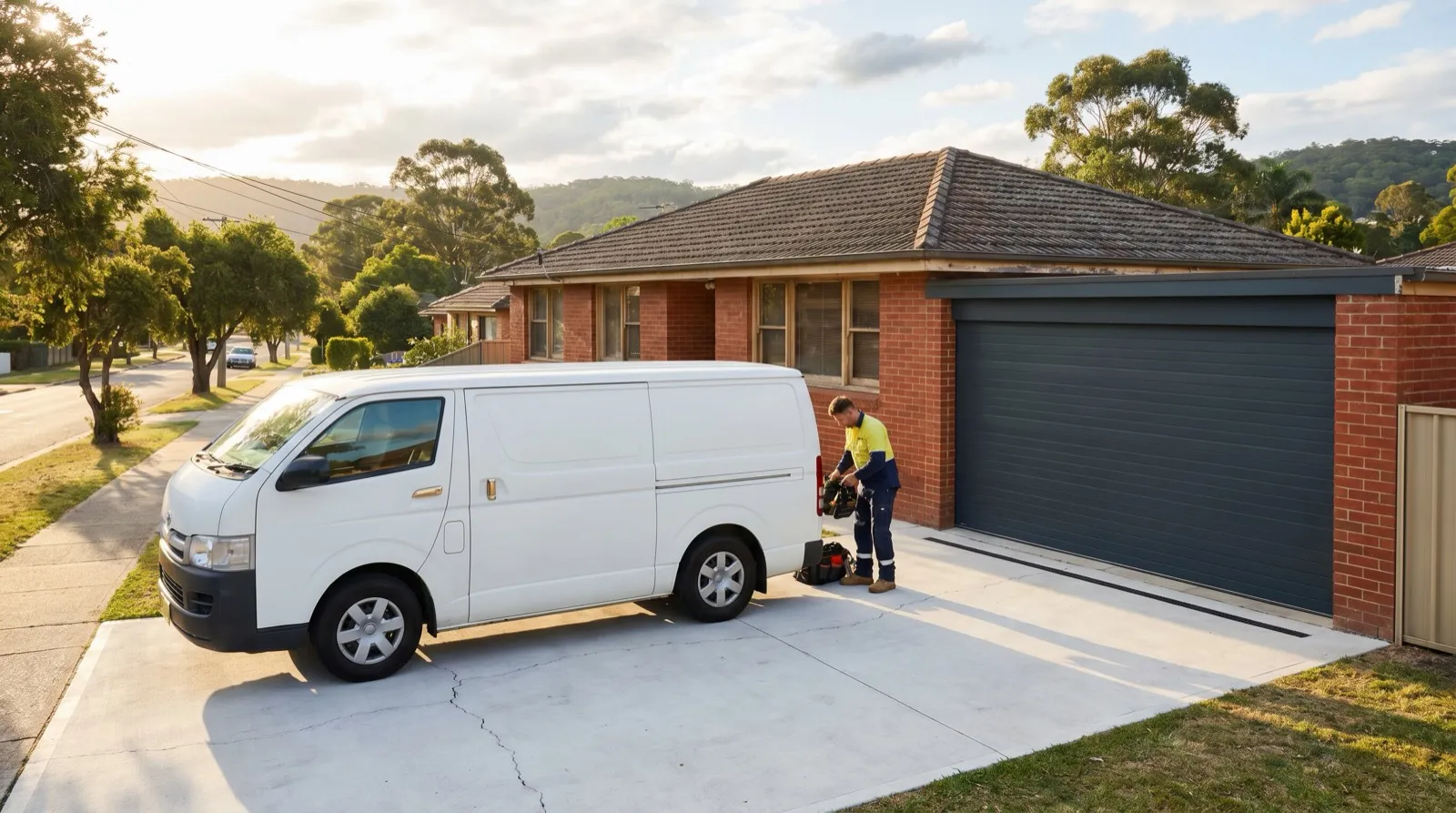
Two kinds of visit, one discipline. Faults are a call-out: we come, inspect the whole door, and repair on site. New doors are a free measure and quote: the opening measured, the right door for it quoted, no obligation. Every job starts with an inspection and ends with the door handed back in good running order, or a plain recommendation if it's past that.
How a job is priced
Repairs are a call-out followed by an on-site price before any work starts, based on what the inspection actually finds. New doors are quoted after the measure, as a fixed figure for the door, the hardware and the fit. No price comes off a website, because no honest one can: the door has to be seen. You'll never be quoted for work the inspection didn't justify.
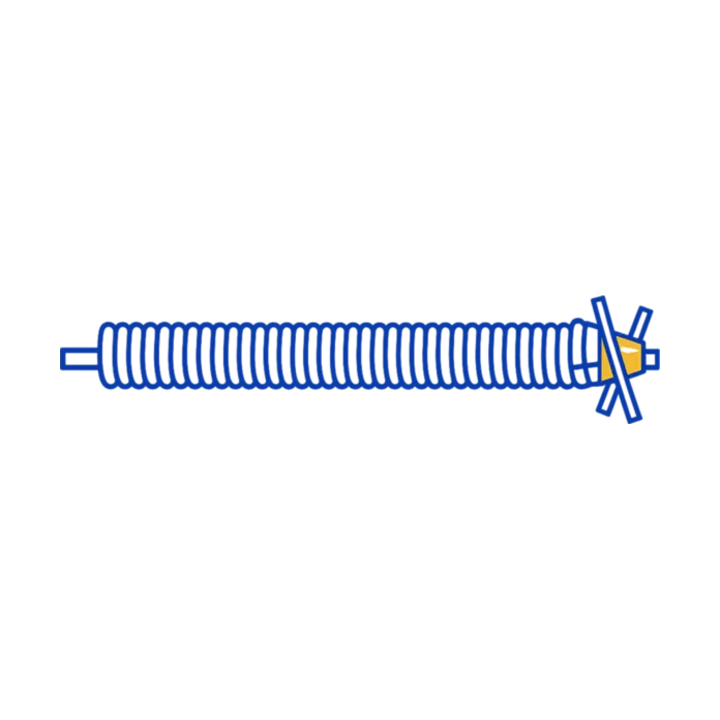
Springs & cables
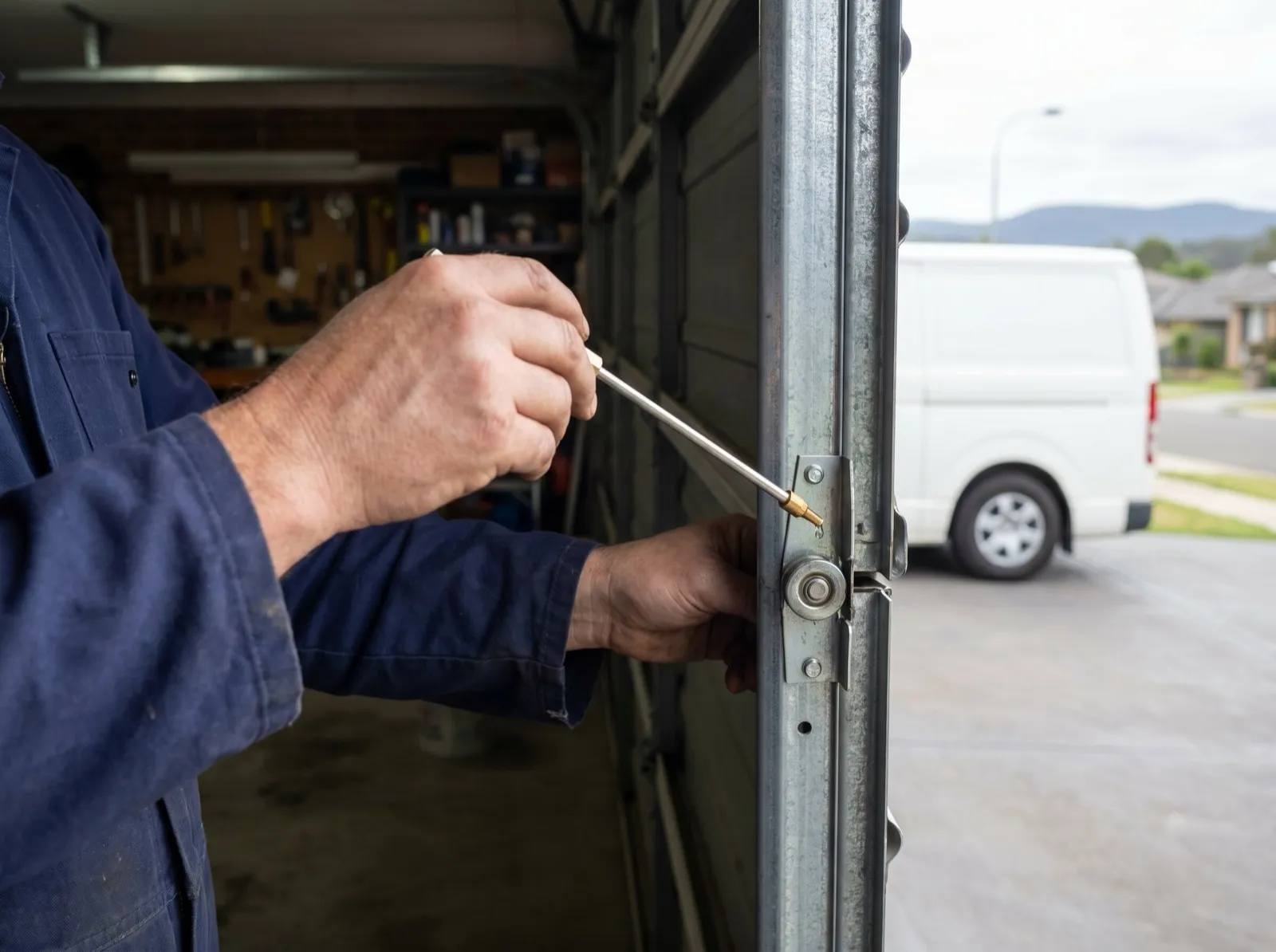
The torsion spring does the lifting; the door only weighs what it weighs because the spring is holding the rest. When it snaps, usually with a bang you'll hear from inside the house, the door becomes dead weight on the spot. Lift cables fray and let go the same way, one strand at a time.
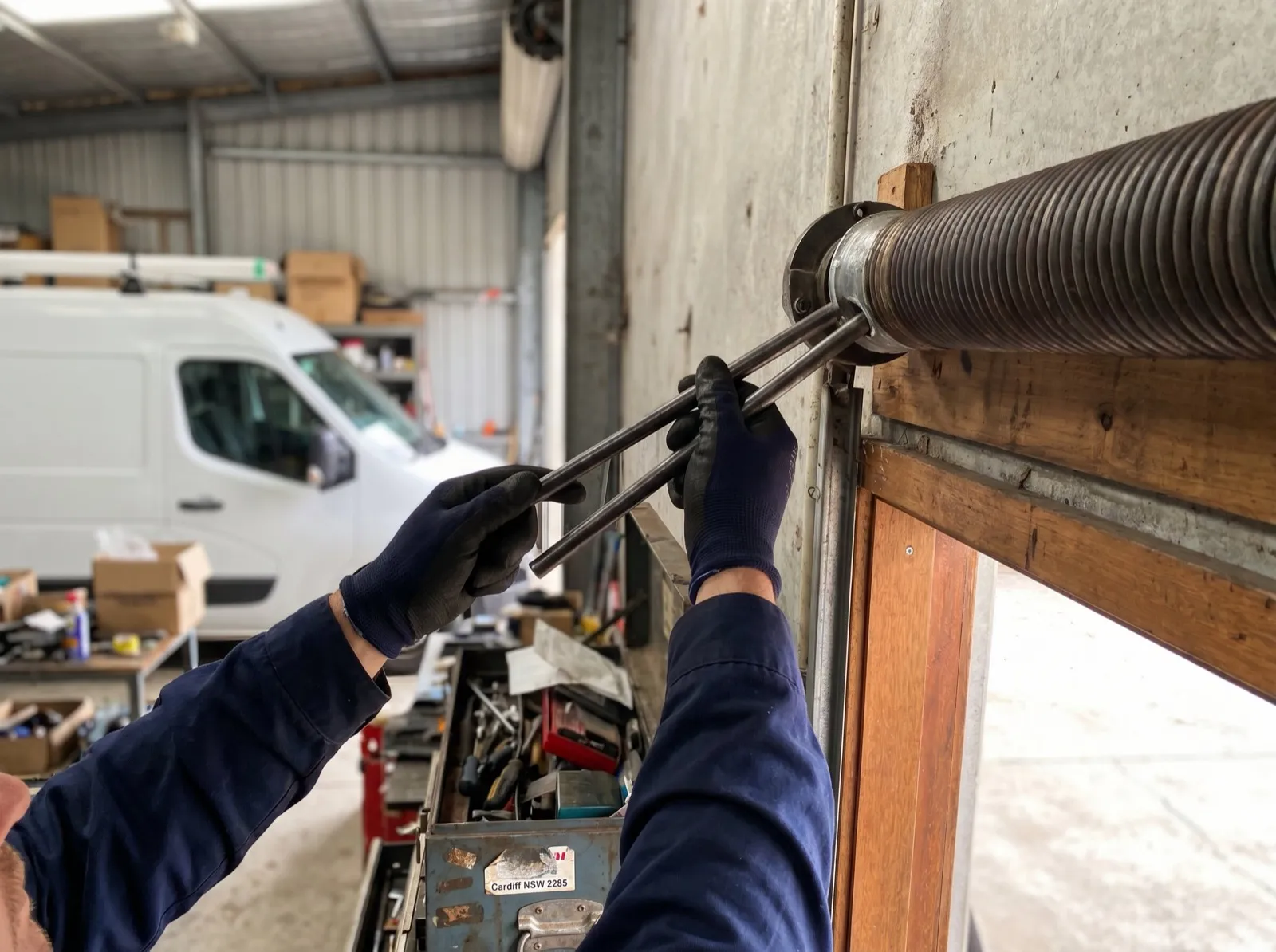
- Torsion and extension springs replaced and set to tension with winding bars
- Snapped and frayed lift cables replaced, drums checked and re-seated
- Balance set and tested before the door goes back into service
The safety line, plainly: a wound spring stores the door's whole weight. It's set with proper winding bars by someone who does it week in, week out. It is not a spanner job, whatever the video says. Cardiff was called Winding Creek before it was called Cardiff; winding is still the part of this trade you don't improvise.

Off-track doors & rollers
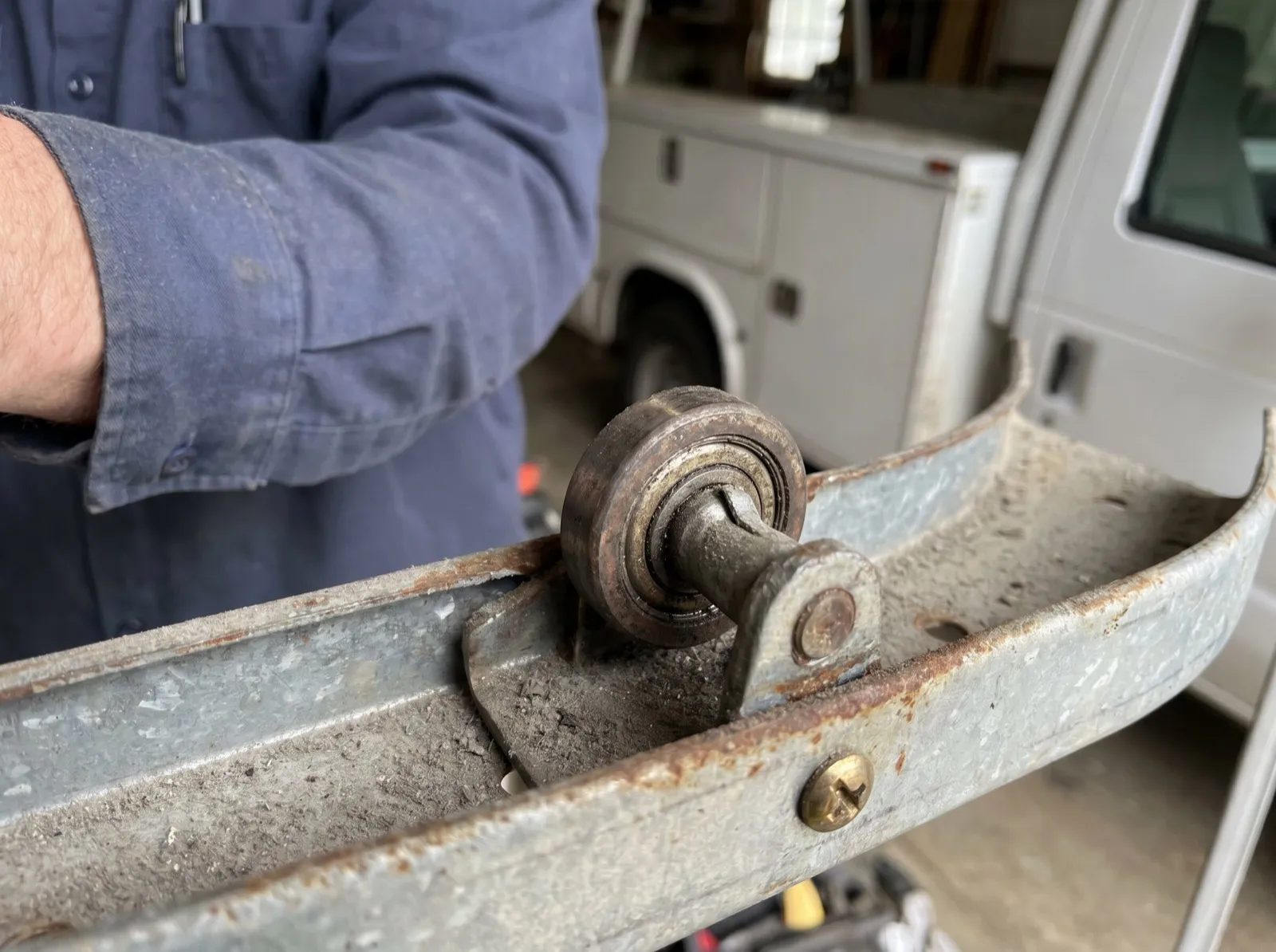
A door rides its tracks on a set of rollers, and both wear. When a worn roller lets go or a guide gets knocked out of line, the door jumps the track and sits crooked in the opening. It looks dramatic; it's usually running gear at the end of its life.
- Doors re-railed and tracks re-aligned to run true
- Worn, seized or shattered rollers replaced through the set, not one at a time
- Bent guides straightened or replaced, fixings checked
Leave it where it sits. A door off its track is unsupported. Don't force it back into the guide and don't run the opener at it; both can bring it down.
Rebalance & tune-up
This is the visit the workshop suburb would recognise: scheduled maintenance, done properly, before the failure. Most of the doors on the valley floor have never had one, and it shows in the same order every time: the door goes heavy, then noisy, then it stops.
- Balance
- Spring tension measured against the door's actual weight, then set so the door sits where you leave it.
- Running gear
- Rollers, hinges, bearings and cables inspected and lubricated; anything finished gets named, with the why.
- Tracks
- Alignment and fixings checked so the door runs true instead of grinding its way up.
- Opener
- Force and travel limits checked, safety reverse tested against resistance.
One visit, and a door that lifts the way it did when it was fitted. If something is close to the end, you'll hear it from us before it fails, not after.
Openers & motors
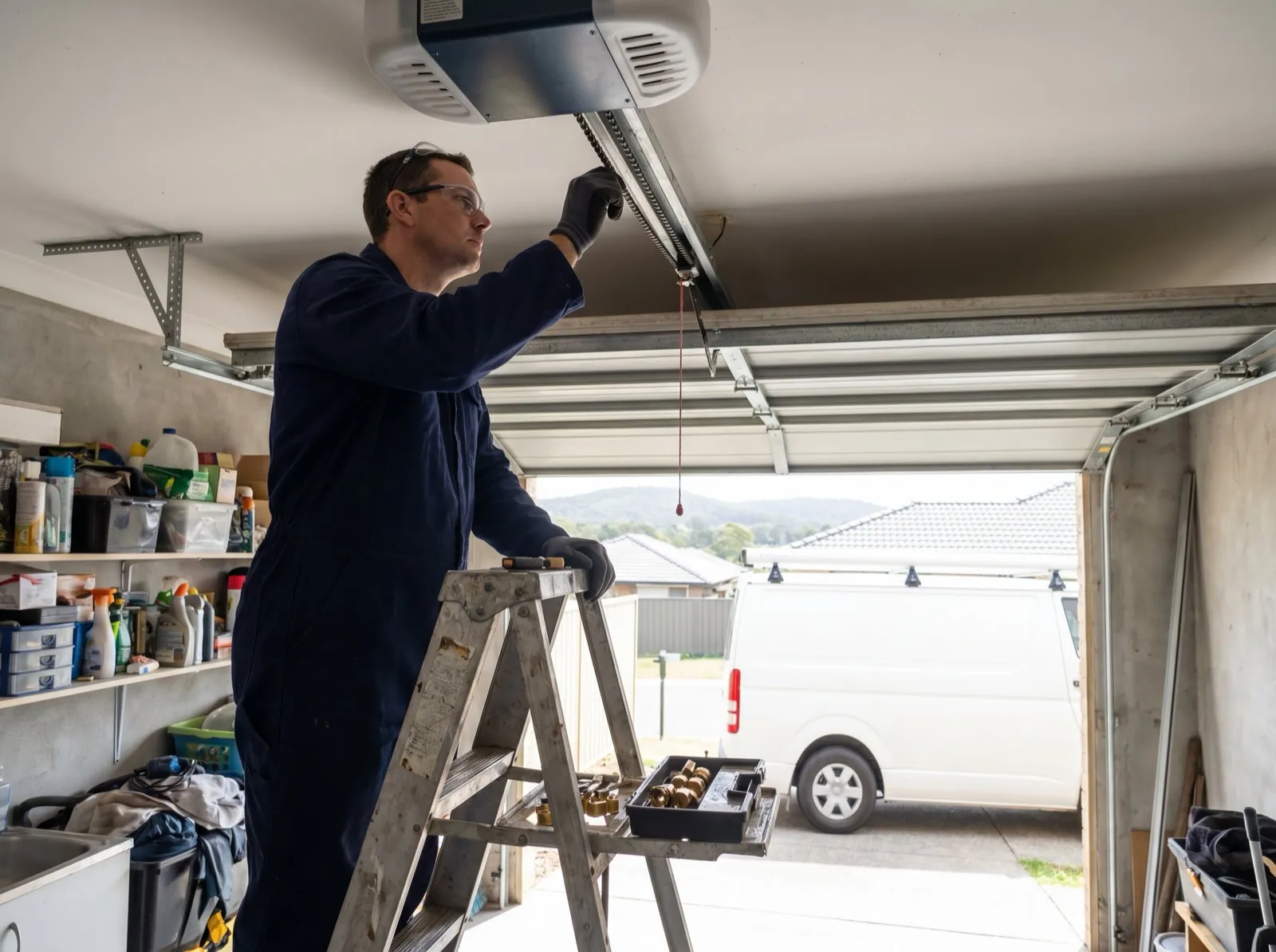
When a door "won't open", the fault is on one of two sides: the opener (motor, remote, keypad, safety beams) or the door itself (spring, cables, balance). An opener dragging a badly balanced door up is also how good motors die young, which is why we check the door before we condemn the motor.
- Opener faults diagnosed and repaired; worn units replaced with one sized to the door
- Remotes and keypads supplied, replaced and re-coded
- Safety beams aligned and the auto-reverse tested properly
Where an opener needs mains wiring, that part is licensed electrical work and is done by a licensed electrician, confirmed on site. Opener recalls and safety notices are worth a look if yours is old: the ACCC keeps a public list[1].
New doors: sectional, roller, tilt
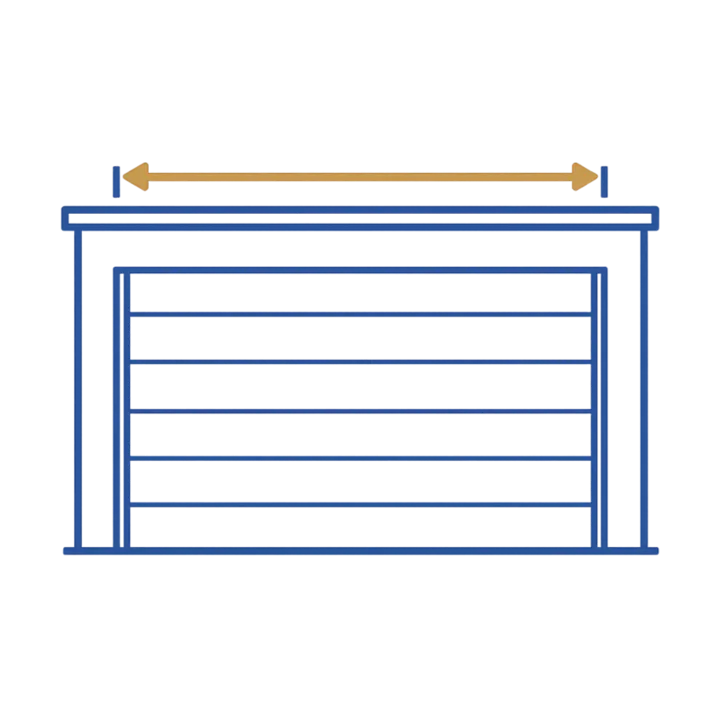
The considered path, and around here it usually starts with an original tilt door that has done decades of honest work and owes the house nothing. A new sectional door has to fit the opening the old one leaves behind, and post-war openings are rarely square, which is why the measure matters more than the brochure.
- Sectional
- The modern default: panels that rise and stack flat along the ceiling. Quiet, sealed, insulated options for a west-facing door.
- Roller
- A corrugated curtain on a drum. The answer for tight headroom and short driveways, and the standard on workshop units.
- Tilt
- The one-piece door most of this valley was built with. Still made, still the right fit for some openings.
We fit doors from the mainstream Australian makers and we'll talk you through the honest differences for your opening. We don't claim dealer badges, and the measure and quote costs nothing either way.

Commercial roller doors
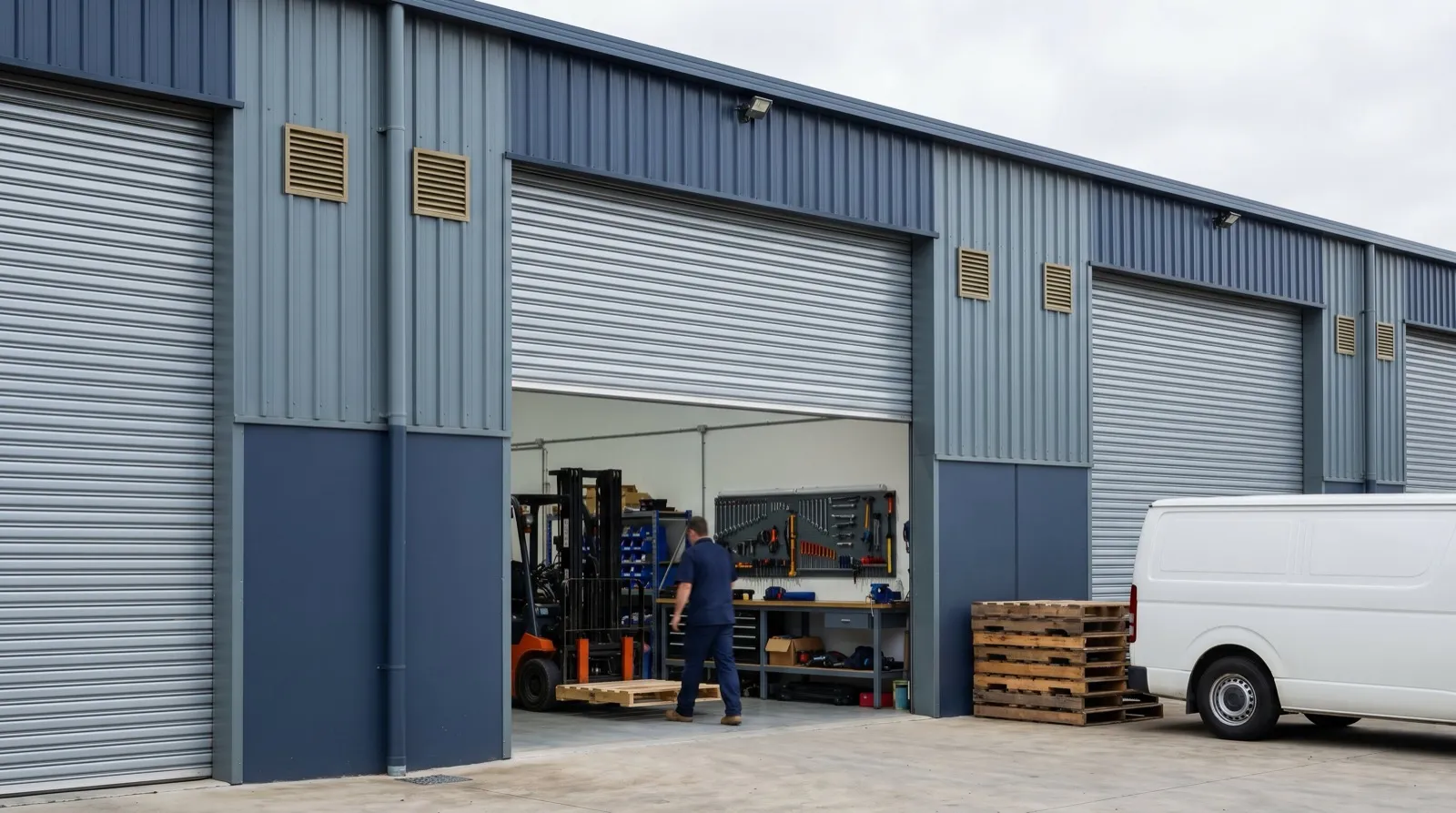
The workshop units and warehouses along Munibung Road and around Glendale run on their roller doors the way a shop runs on its front door. A seized curtain on a weekday morning is lost trade, so commercial doors get treated as plant: serviced on a schedule, repaired when they fail, and replaced when the honest arithmetic says so.
- Roller shutters and commercial curtains serviced, repaired and replaced
- Chain hoists, springs, guides and bottom rails inspected and set
- Scheduled maintenance for units that can't afford a stuck door
References
- ACCC Product Safety: garage door opener recalls. The regulator's public list of recalled openers and safety notices; worth checking against an older unit before spending money on it.
Ready when the door isn't.
Tell us what the door is doing. We'll look, give you a straight repair-or-replace call, and hand it back in good running order.